There's a particular kind of parent worry that doesn't get talked about enough.
Not the worry that your child won't study hard enough. The opposite one. The worry that they'll study too hard, in the wrong way, at the wrong age, and arrive at Class 11 technically prepared but emotionally exhausted. Knowing the syllabus but dreading the subject. Scoring marks on paper while quietly losing the curiosity that made them sharp in the first place.
This happens more often than most schools will admit. And it happens specifically in environments that treat competitive exam preparation as a pressure game rather than a learning one.
At Sanskar Innovative School, we've spent more than 15 years building a model that refuses that trade-off.
The Problem With Pure Pressure
Picture a student who has been drilling IIT problems since Class 7.
They know the formulas. They've done the mock tests. Their parents have invested significantly in coaching, study material, and structured schedules. But when the actual exam arrives, something unexpected happens. The recall that worked perfectly in a familiar environment freezes under real pressure. The student who scored 85 in every practice test scores 61 on the day that counts.
This is not a knowledge failure. It's a psychological one.
When learning is driven entirely by pressure and performance anxiety, the brain begins to associate the subject matter with stress. Over time, even seeing a question paper triggers a mild threat response. Cortisol rises. Working memory narrows. The answers that were there moments ago become harder to access.
The irony is that the very intensity meant to produce results ends up undermining them.
Why Most Exam-Focused Schools Get This Wrong
The standard approach to competitive exam preparation is straightforward: start early, drill hard, test constantly, and remove everything that isn't directly syllabus-relevant.
It sounds logical. And for a small percentage of students with very high intrinsic motivation and low anxiety profiles, it works reasonably well. But for the majority, it produces a specific pattern. Strong performance in Class 7 and 8, visible fatigue by Class 9, declining engagement by Class 10, and a student who reaches the most important two years of their school life already running on empty.
The root cause is a fundamental misunderstanding of how motivation works in learning.
Research from the American Psychological Association on intrinsic motivation and long-term academic achievement consistently shows that students who find genuine meaning and enjoyment in what they study retain more, perform better under pressure, and sustain their performance over longer periods than students driven primarily by fear of failure or external reward. Curiosity isn't a luxury that competes with academic rigour. It's the fuel that makes rigour sustainable.
The Insight That Changes How You Think About Exam Prep
Here's what 15 years of watching students at Sanskar has shown clearly: the students who perform best in IIT-JEE and NEET aren't the ones who studied the most hours. They're the ones who stayed genuinely interested the longest.
A student who finds physics fascinating will voluntarily revisit a concept they didn't understand. A student who is only there to pass an exam will memorise the answer and move on. Both might score similarly on a Class 8 test. By Class 12, the gap between them is enormous.
This means that protecting a student's relationship with learning, keeping the subject alive and interesting through the years of preparation, is not a soft consideration. It's the most strategically important thing a school can do for competitive exam outcomes.
From Our Experience: At Sanskar, we've consistently seen that students who participate actively in debates, chapter-end presentations, and group discussions perform more confidently in competitive exam interviews and viva voce assessments than students from pure-drilling environments. The ability to articulate thinking, not just recall answers, is what separates good scores from exceptional ones at the IIT and NEET level.
How Sanskar's Academic Model Actually Works
The foundation of Sanskar's approach is the CBSE curriculum, taught with a deliberate emphasis on conceptual clarity and analytical thinking rather than rote memorisation. Every subject is taught with the question "why does this work?" before "what is the answer?"
This matters more than it sounds. A student who understands why Newton's third law works the way it does can derive answers they've never seen before. A student who memorised it can only reproduce what they've practised. In an exam designed to test thinking, these two students are not equally prepared.
IIT-JEE and NEET Foundation from Grade 6
The Foundation programme begins early, but not with pressure. The first two years are about building a strong base: number sense, logical reasoning, conceptual understanding in science, and the habit of working through problems methodically. Expert faculty guide students with concept-oriented training and regular practice tests that are designed to build exam confidence gradually, not induce anxiety through constant high-stakes testing.
Hundreds of alumni have gone on to secure admissions in IITs. Many have cleared NEET and joined top medical colleges across India. That track record didn't come from drilling harder than other schools. It came from building deeper.
Faculty Who Make the Difficult Feel Accessible
One of the most consistent things Sanskar alumni say, and the documents speak for themselves here, is that teachers at this school have a particular ability to explain the toughest concepts in the easiest and most pleasant way. That's not an accident of hiring. It's a deliberate standard.
A student who leaves a class feeling capable is more likely to attempt the next difficult problem independently. A student who leaves feeling confused and pressured avoids the subject outside class hours. Over five or six years of preparation, the difference in voluntary engagement between these two students is hundreds of hours.
Communication as a Core Academic Skill
At Sanskar, students are expected to speak in front of the whole class for a few minutes at the end of every chapter in every subject. This is not a performance exercise. It's a comprehension one. A student who can explain a concept clearly to their peers understands it at a level that multiple-choice questions never reveal.
Public speaking, debates, and group discussions are built into the regular academic schedule. Students are provided daily newspapers, dictionaries, and grammar books. The library holds over 3,000 books, including fiction, non-fiction, biographies, and reference material, because reading widely is how language and analytical thinking develop together.
This is exam preparation. It just doesn't look like drilling.
Guided Study Hours Built for Every Learner
Residential students at Sanskar have supervised study hours every morning and evening, with experienced teachers and wardens present throughout. But what makes these hours different from standard supervised study is the differentiation built into them.
Students who are strong academically use this time to push ahead into competitive exam preparation. Students who need additional support receive personal attention, doubt clarification, and foundational reinforcement so they can perform on par with their peers. No student is left at the back of the room to figure it out alone.
Dedicated mentors track individual progress and adjust support accordingly. This is not a large coaching centre model where the fastest students set the pace and everyone else keeps up or falls behind. It's a genuine mentoring environment.
The Balance That Makes Sustained Performance Possible
Yoga and meditation every morning regulate the stress response before the academic day begins. Co-curricular activities, kung fu, skating, calligraphy, music, trekking, and NCC training, give students genuine physical and creative engagement that keeps them mentally fresh for learning. Recreational outings break the routine at key points in the term.
This isn't generosity. It's science. A student whose nervous system is regulated, whose day has variety, and whose sense of self extends beyond their exam scores is a student who can sustain high performance across six years of preparation without burning out before the finish line.
What Parents Often Discover When They Visit
Parents who visit the Sanskar campus in Medchal frequently say the same thing: the students here seem happy to be here.
That observation carries more weight than it might initially seem. A student who genuinely wants to be in school attends every class with a different quality of attention than one who is simply present. Over years of preparation, that difference in daily engagement accumulates into a measurable performance gap.
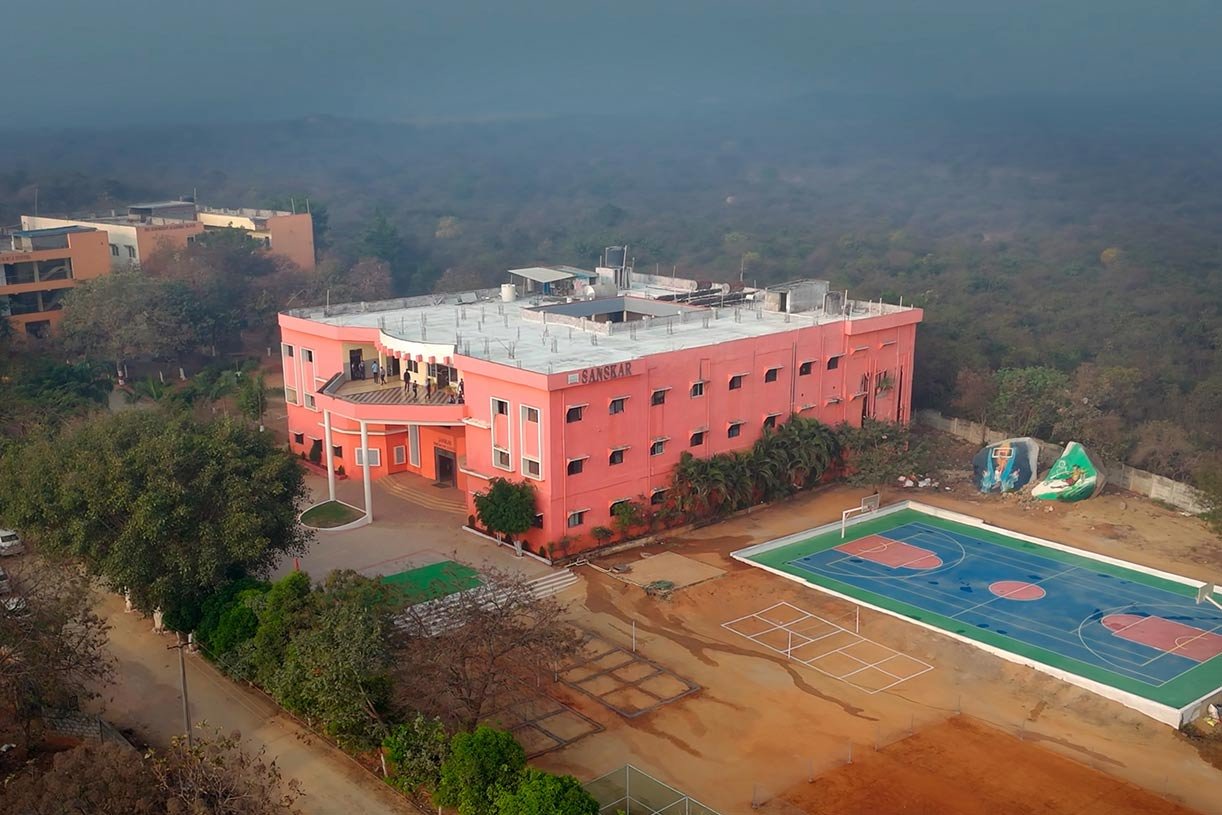
The campus itself, 4 acres of green space near Medchal, the structured residential life, the named hostels, the dining hall, the sports courts, and the NCC wing, all of it is designed to make a child feel that school is worth being at. That feeling is not separate from academic performance. It's part of what produces it.
Final Takeaway: Based on more than 15 years of preparing students for IIT-JEE, NEET, and Olympiads at Sanskar Innovative School, the most reliable path to competitive exam success is not the one with the most pressure. It's the one where the student stays curious, stays confident, and stays genuinely engaged with learning from Class 6 to Class 12. If you're looking for a school that takes both your child's ambition and their wellbeing seriously, visit the Sanskar campus in Medchal and speak with the students and parents who've experienced this model firsthand.
Admissions enquiries and campus visits are welcome. Come and see how we prepare students not just for exams, but for everything that comes after.
Not the worry that your child won't study hard enough. The opposite one. The worry that they'll study too hard, in the wrong way, at the wrong age, and arrive at Class 11 technically prepared but emotionally exhausted. Knowing the syllabus but dreading the subject. Scoring marks on paper while quietly losing the curiosity that made them sharp in the first place.
This happens more often than most schools will admit. And it happens specifically in environments that treat competitive exam preparation as a pressure game rather than a learning one.
At Sanskar Innovative School, we've spent more than 15 years building a model that refuses that trade-off.
The Problem With Pure Pressure
Picture a student who has been drilling IIT problems since Class 7.
They know the formulas. They've done the mock tests. Their parents have invested significantly in coaching, study material, and structured schedules. But when the actual exam arrives, something unexpected happens. The recall that worked perfectly in a familiar environment freezes under real pressure. The student who scored 85 in every practice test scores 61 on the day that counts.
This is not a knowledge failure. It's a psychological one.
When learning is driven entirely by pressure and performance anxiety, the brain begins to associate the subject matter with stress. Over time, even seeing a question paper triggers a mild threat response. Cortisol rises. Working memory narrows. The answers that were there moments ago become harder to access.
The irony is that the very intensity meant to produce results ends up undermining them.
Why Most Exam-Focused Schools Get This Wrong
The standard approach to competitive exam preparation is straightforward: start early, drill hard, test constantly, and remove everything that isn't directly syllabus-relevant.
It sounds logical. And for a small percentage of students with very high intrinsic motivation and low anxiety profiles, it works reasonably well. But for the majority, it produces a specific pattern. Strong performance in Class 7 and 8, visible fatigue by Class 9, declining engagement by Class 10, and a student who reaches the most important two years of their school life already running on empty.
The root cause is a fundamental misunderstanding of how motivation works in learning.
Research from the American Psychological Association on intrinsic motivation and long-term academic achievement consistently shows that students who find genuine meaning and enjoyment in what they study retain more, perform better under pressure, and sustain their performance over longer periods than students driven primarily by fear of failure or external reward. Curiosity isn't a luxury that competes with academic rigour. It's the fuel that makes rigour sustainable.
The Insight That Changes How You Think About Exam Prep
Here's what 15 years of watching students at Sanskar has shown clearly: the students who perform best in IIT-JEE and NEET aren't the ones who studied the most hours. They're the ones who stayed genuinely interested the longest.
A student who finds physics fascinating will voluntarily revisit a concept they didn't understand. A student who is only there to pass an exam will memorise the answer and move on. Both might score similarly on a Class 8 test. By Class 12, the gap between them is enormous.
This means that protecting a student's relationship with learning, keeping the subject alive and interesting through the years of preparation, is not a soft consideration. It's the most strategically important thing a school can do for competitive exam outcomes.
From Our Experience: At Sanskar, we've consistently seen that students who participate actively in debates, chapter-end presentations, and group discussions perform more confidently in competitive exam interviews and viva voce assessments than students from pure-drilling environments. The ability to articulate thinking, not just recall answers, is what separates good scores from exceptional ones at the IIT and NEET level.
How Sanskar's Academic Model Actually Works
The foundation of Sanskar's approach is the CBSE curriculum, taught with a deliberate emphasis on conceptual clarity and analytical thinking rather than rote memorisation. Every subject is taught with the question "why does this work?" before "what is the answer?"
This matters more than it sounds. A student who understands why Newton's third law works the way it does can derive answers they've never seen before. A student who memorised it can only reproduce what they've practised. In an exam designed to test thinking, these two students are not equally prepared.
IIT-JEE and NEET Foundation from Grade 6
The Foundation programme begins early, but not with pressure. The first two years are about building a strong base: number sense, logical reasoning, conceptual understanding in science, and the habit of working through problems methodically. Expert faculty guide students with concept-oriented training and regular practice tests that are designed to build exam confidence gradually, not induce anxiety through constant high-stakes testing.
Hundreds of alumni have gone on to secure admissions in IITs. Many have cleared NEET and joined top medical colleges across India. That track record didn't come from drilling harder than other schools. It came from building deeper.
Faculty Who Make the Difficult Feel Accessible
One of the most consistent things Sanskar alumni say, and the documents speak for themselves here, is that teachers at this school have a particular ability to explain the toughest concepts in the easiest and most pleasant way. That's not an accident of hiring. It's a deliberate standard.
A student who leaves a class feeling capable is more likely to attempt the next difficult problem independently. A student who leaves feeling confused and pressured avoids the subject outside class hours. Over five or six years of preparation, the difference in voluntary engagement between these two students is hundreds of hours.
Communication as a Core Academic Skill
At Sanskar, students are expected to speak in front of the whole class for a few minutes at the end of every chapter in every subject. This is not a performance exercise. It's a comprehension one. A student who can explain a concept clearly to their peers understands it at a level that multiple-choice questions never reveal.
Public speaking, debates, and group discussions are built into the regular academic schedule. Students are provided daily newspapers, dictionaries, and grammar books. The library holds over 3,000 books, including fiction, non-fiction, biographies, and reference material, because reading widely is how language and analytical thinking develop together.
This is exam preparation. It just doesn't look like drilling.
Guided Study Hours Built for Every Learner
Residential students at Sanskar have supervised study hours every morning and evening, with experienced teachers and wardens present throughout. But what makes these hours different from standard supervised study is the differentiation built into them.
Students who are strong academically use this time to push ahead into competitive exam preparation. Students who need additional support receive personal attention, doubt clarification, and foundational reinforcement so they can perform on par with their peers. No student is left at the back of the room to figure it out alone.
Dedicated mentors track individual progress and adjust support accordingly. This is not a large coaching centre model where the fastest students set the pace and everyone else keeps up or falls behind. It's a genuine mentoring environment.
The Balance That Makes Sustained Performance Possible
Yoga and meditation every morning regulate the stress response before the academic day begins. Co-curricular activities, kung fu, skating, calligraphy, music, trekking, and NCC training, give students genuine physical and creative engagement that keeps them mentally fresh for learning. Recreational outings break the routine at key points in the term.
This isn't generosity. It's science. A student whose nervous system is regulated, whose day has variety, and whose sense of self extends beyond their exam scores is a student who can sustain high performance across six years of preparation without burning out before the finish line.
What Parents Often Discover When They Visit
Parents who visit the Sanskar campus in Medchal frequently say the same thing: the students here seem happy to be here.
That observation carries more weight than it might initially seem. A student who genuinely wants to be in school attends every class with a different quality of attention than one who is simply present. Over years of preparation, that difference in daily engagement accumulates into a measurable performance gap.
The campus itself, 4 acres of green space near Medchal, the structured residential life, the named hostels, the dining hall, the sports courts, and the NCC wing, all of it is designed to make a child feel that school is worth being at. That feeling is not separate from academic performance. It's part of what produces it.
Final Takeaway: Based on more than 15 years of preparing students for IIT-JEE, NEET, and Olympiads at Sanskar Innovative School, the most reliable path to competitive exam success is not the one with the most pressure. It's the one where the student stays curious, stays confident, and stays genuinely engaged with learning from Class 6 to Class 12. If you're looking for a school that takes both your child's ambition and their wellbeing seriously, visit the Sanskar campus in Medchal and speak with the students and parents who've experienced this model firsthand.
Admissions enquiries and campus visits are welcome. Come and see how we prepare students not just for exams, but for everything that comes after.